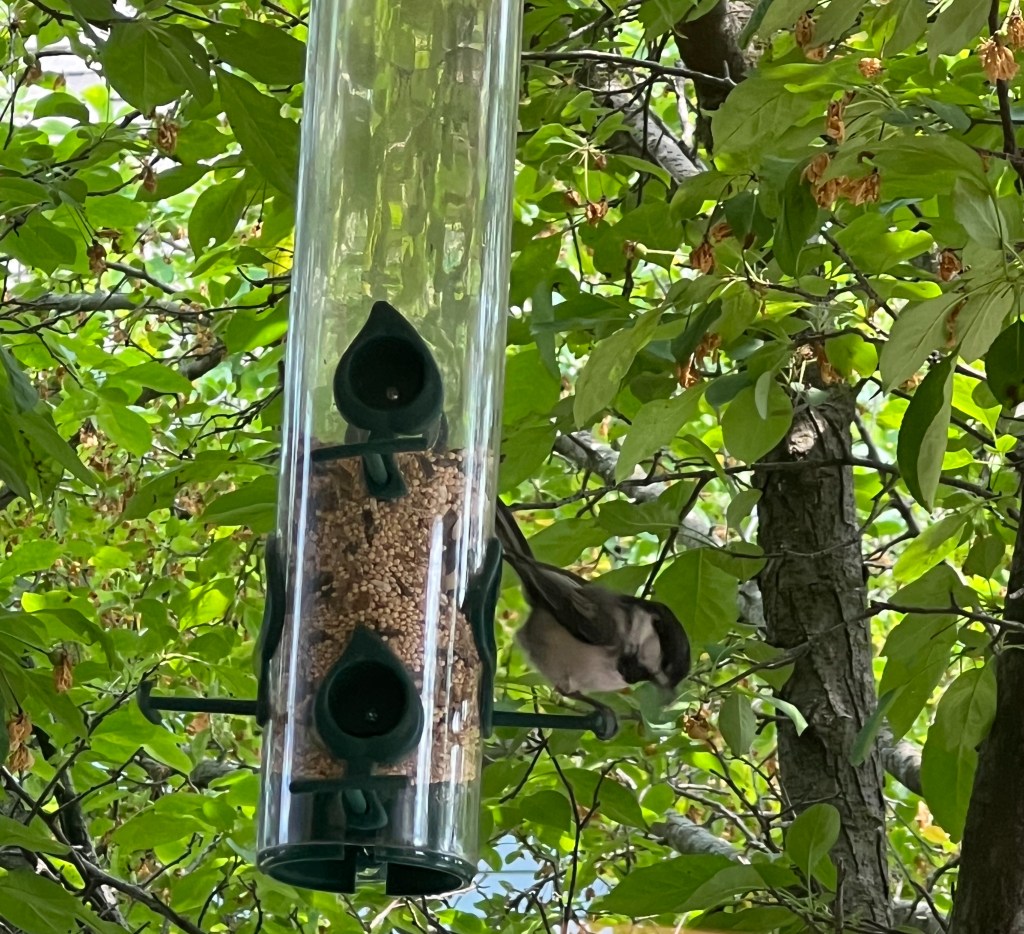
Like any other 22-year-old… I’ve recently gotten into bird watching.
It’s a little creepy when you think about it. I sit by my kitchen window, waiting for these creatures I’ve lured into a station where I’ve placed seeds for them for my viewing pleasure (and I take pictures of them, ok, I’m done). But hey, whatever makes me happy!
But just like any other hobby, getting my feeder started was a little daunting and took some patience. Thankfully I have some fellow bird watchers, aka my grandmother Connie, who gave me a few pointers. Pairing Connie’s advice with my own research, here is what I think a beginner bird watcher should know.
Bird Watching Step 1: Buy a Feeder
Duh. Go out and get a feeder. I just graduated college, so my feeder is $7 bucks, but it gets the job done. Depending on your feeder area and target birds (we will get into that), you might want bigger perches or anti-squirrel mechanisms.
Bird feeders can be purchased online, but why waste your time reading (ironic) when you can go into a pet store and ask a fellow bird watcher – which typically is retired, sweet lady. They know what you should get, and, plus, they are super fun to talk to.
Bird Watching Step 2: Buy Feed
You guessed it, a bird feeder can only feed birds with feed. Whew, what a sentence.
Now this is where my “expertise” gets hairy. I opted for a bird feed called “Birder’s Choice,” which said on the bag that it targets Minnesota’s common birds. Some of the other feeds were for cardinals or specific birds, but again, choosing bird feed can be as straightforward or as complicated as you make it. I’ve found that feed ranges from $5 to $20 depending on how much feed you’re looking to buy.
Bird watching Step 3: Finding the perfect place for your feeder
This is where we can experiment. My research shows that an ideal place for a feeder is 10-15 feet from a window and 10-15 feet from trees.

I’ve placed my bird feeder on a hook above my porch, close to my sliding glass door and a tree. It’s not ideal, but I’ve seen plenty of birds so far. Also, the birds have made such a mess on top of my dad’s grill, and it’s way too funny to move now.
But play around and see what works. If the birds haven’t caught on to your feeder after a week of placing it, maybe try to move it to somewhere with more trees or more windows.
Bird watching step 4: wait and enjoy the birds!
As an established feeder to the birds in my community, I’ve realized that starting to bird watch is a patience game.
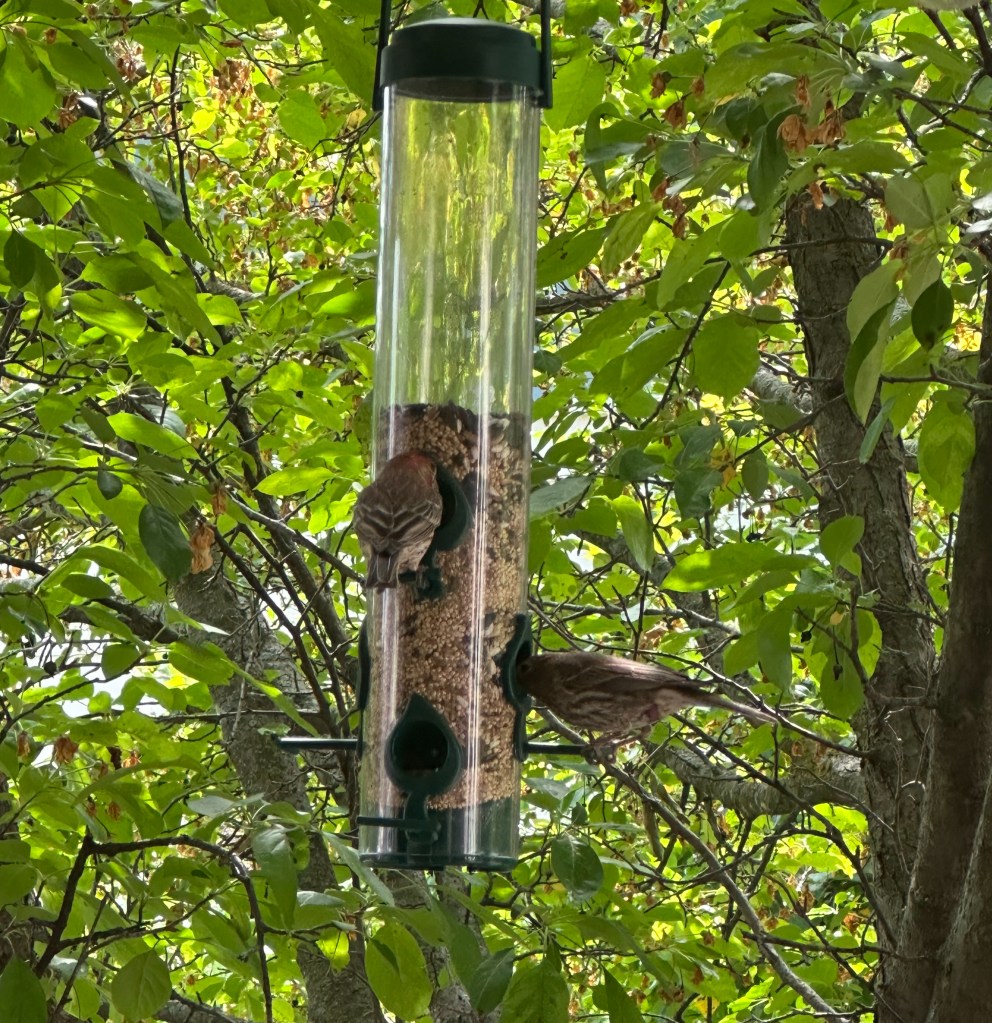
How Connie described it was it’s like a new restaurant in your neighborhood. It might take some time for word-of-mouth to spread about your delicious establishment, but eventually, they will flock to you. And after five days of no birds at my feeder, the morning of the sixth day, I was greeted with the glorious chirps of the fruits of my labor.
If you want to take things a step further, you can get a bird field guide to see exactly who is at your feeder. My lovely boyfriend, Andrew, got me one, and it’s been cool to see which birds frequent the feeder. My most common bird is a house finch and they love to socialize which makes sense seeing how they all come as a squad to munch on the seed.

Bird watching step 5: make a private story for your birds and concern every single one of your friends
This one is optional.
But on a more serious note, bird watching has been a simple – and inexpensive – way to connect with nature in between the time I spend on screens. Between writing and my current job, I sometimes feel like I’ve been sucked into an all-virtual world – void of nature and simplicity. So if that sounds like you, go out, follow my steps and enjoy a sliver of nature each day by watching sweet, innocent and some cool-looking birds!
If you’ve just started or you’re a bird-watching expert, let me know what birds you see by tagging me @CaitlynGarrity on Twitter and Instagram.
 How Caitlyn C's It
Leave a comment