In the past four years, I’ve conducted around 40 informational interviews.
Some have been with writers, some have been with social media professionals and some have even been with tech and healthcare professionals. The majority of interviews were with people who held positions I knew I’d want to in the future and some were people with positions that I’d never take.
You might be wondering:
- Caitlyn what is an informational interview,?
- Why have you conducted so many informational interviews?
- Why bother interviewing someone in an industry you have zero interest in?
1. What is an informational interview?
An informational interview is an interview conducted solely for the purpose of gathering information.
Informational interviews are almost exactly what a journalist does everyday; they ask people questions to see what that person knows.
While not exactly the same, an informational interview in a networking context is an incredible way to meet new and experienced people that you can learn from.
If you are skeptical on if informational interviews are normal, they are! Google anything about networking and I can promise that informational interviews will pop up as a way to get your foot in the door at companies and build a strong network. You shouldn’t ask for a job during these interviews, but the connection and meaningful conversation can certainly lead to one in the future.
Informational interviews are easier to set up than you think because people love to talk about themselves – plain and simple. Not that these professionals are self-absorbed, but they often spend a lot of time working for others. So informational interviews are their chance to share their wisdom and journey to an aspiring young professional is a very valuable gift that people love to give!
2. Why have you conducted so many informational interviews?
When it comes to how many informational interviews you should do, I challenge you to think of some day-to-day conversations as an informational interview.
While “actual” informational interviews tend to be scheduled times dedicated to asking questions to someone else, anytime you have a conversation at a cocktail hour or even in line at the coffee shop, those are also conversations in which information is exchanged. Boom, an informational interview.
Informational interviews aren’t something you should put a minimum or maximum number on. They’re a way to continuously build your network, even when you are established in your career.
3. Why bother interviewing someone in an industry you have zero interest in?
Have you ever met someone who works in an industry that is entirely different than the one they started in?
People end up in places they never imagined they would, but that doesn’t mean their experiences or connections erase from that previous industry.
Talking to people who might have jobs you don’t care for is a great way not only to make unique connections but also to learn something new! You might not have known the medical industry has a huge need for graphic designers if you didn’t speak to a hospital administrator. That might’ve not been a career you’ve imagined, but it sure could be. The same thing happened with me and finance.
I always thought the finance industry was stale until I met people within it. They talked about the flexibility, the people, and the opportunities, and now I’m in an internship with a financial firm, and it’s been anything but stale. There are far more departments within finance that coincide with my interests and skillset – and I don’t even need to touch a number!
So now that I’ve answered some of your questions let’s dive into an easy, quick list of things you need to do to nail your first interview.
Before the informational interview
Find a connection
LinkedIn is the great first step to organizing an informational interview.
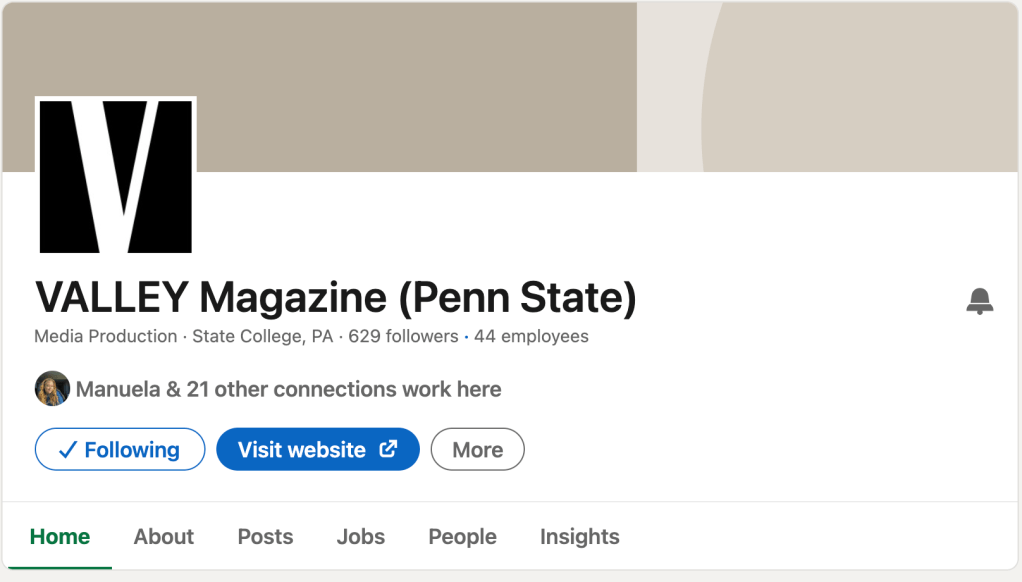
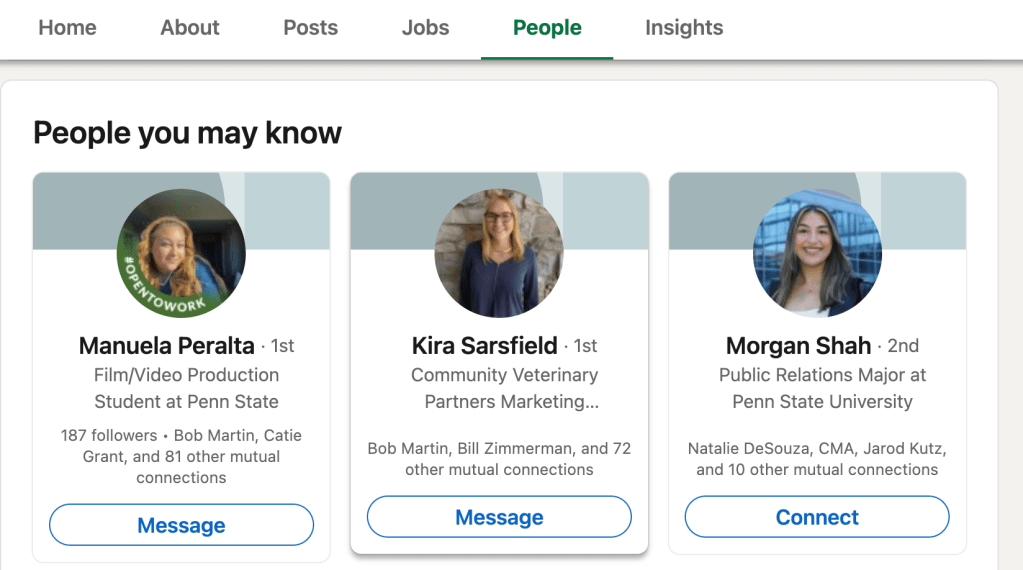
With LinkedIn, you can sort through your connections and see which individuals you want to talk to. Those can be in your pre-existing network or people you share paths with within companies or jobs you’re interested in. LinkedIn has a great tool for finding people from your school or area in certain companies. The following picture is where you can find that tool to start your research.
Ask for the interview and prove that you have genuine interest
Finding the connection is one thing; asking for an interview is another. When asking for an informational interview, you need to get across two things:
1. We have something in common and could have a good conversation.
2. I know what you do, and I have a genuine interest in talking.
No one is going to respond if they feel like you copied and pasted the same message to 100 professionals. The best way to get that response is to tell them a bit about why you want to chat; whether it’s that you like their articles on health and wellness or you loved a certain study that they were named on. That way, you show you did your research, and you’ve even begun a conversation topic they know they can provide information on.

Set up a time
These professionals can be super busy, so make it as easy as possible. If they are interested, try to send a few times that could work for them so it’s hard to say no.
What I like to do is send my Calendly with all my available times within two weeks and send that. They can look at it at their convenience and match it up with their schedule. Plus it makes you look like you have your stuff together.
during the informational interview
It is perfectly normal to be nervous going into an informational interview. However, I’ve found the best way to reduce that nerve is to come in a way more prepared. Don’t be creepy and tell them everything you know, but knowing their background, maybe connections you have, and the general gist of their job and company can give you the ease of mind while you ask your questions.
Also, going into it with a huge list of questions is great. You probably won’t use them all, but that way, you are never without a topic. Questions could be any of the following (but they will vary depending on the person and industry):
How did you get into your field?
What stuff did you do at college that was helpful for your career?
What is your favorite aspect of your job?
Can you walk through what a normal day in your role looks like?
I’d also recommend closing the interview with this question: “Upon our discussion, is there anyone you know you’d think I’d like to talk to?” It’s a great way to find new connections through the one you made! Now that’s networking, baby.
After the informational interview
Time to follow up
Following up is important because it shows communication skills and a genuine appreciation for that person’s time.
Normally a quick thank you and desire for continued connection is a great follow-up to an informational interview.
If you are in the market for a job, this is the most appropriate time to ask for any opportunities. In the follow-up email, you can slip in a question regarding any open roles they might have or send your resume and say that if there is an opening, you would love to be considered. But just remember to make your request respectful and not to come off that a job was the only reason you wanted to chat.
Keep track of your interviews
If you want to be a true networking guru, I’d recommend keeping a Google Sheets or Excel document on everyone you talked to, their contact information, the date of the most recent conversation and some notes on what they said. Not only is this a great way to remember who and what you know, but to refer back onto if you want to follow up with anyone or need a connection for a particular job.
Congratulations, you are now ready to take on your first informational interview. Talking to people you don’t know can be a little scary but once you get a few under your belt, you start to get the flow of how informational interviews go and even improve your conversation skills in other aspects of life.
Let me know what you think about informational interviews and if you have any of your own tips by commenting below or Thread me @caitlyngarrity.
 How Caitlyn C's It
Leave a comment